How long does stamped concrete last?
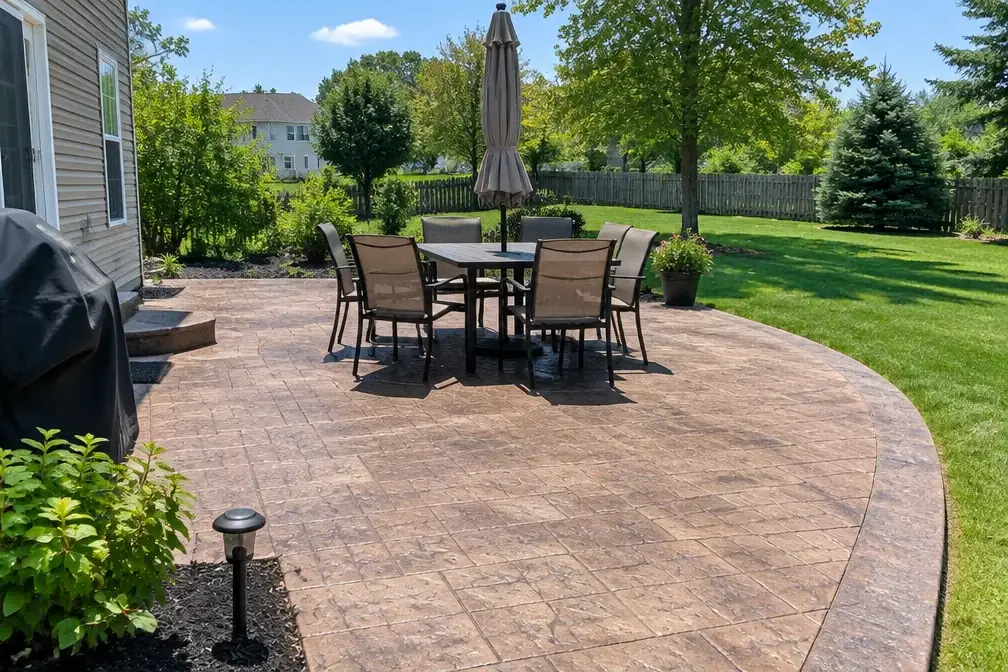
How long does stamped concrete last? With a good base and regular sealing, 25 years or more. The slab can outlive the color, though. What you do in the first few years, and especially what you put on it each winter, has a lot to do with how it ages.
Updated
| Part | Typical life | What shortens it |
|---|---|---|
| Concrete slab | 25 to 40 years | Poor base, poor drainage |
| Integral color | The life of the slab | Surface wear |
| Release color | 10 to 20 years | Hard pressure washing |
| Sealer | 2 to 4 years | Sun, salt and foot traffic |
What decides how long it lasts
Most of the answer is hidden. A stamped slab is only as good as the stone under it, the mix in it and the sealer on it. A slab on a well-compacted base, with steel, proper joints and a 4,000 psi air-entrained mix, can last as long as any concrete. A slab poured on soft fill with too much water may be cracked and flaking within a few years, whatever pattern it has on top.
Location matters as well. A covered porch will outlast a driveway apron. A backyard patio that's never salted has a far easier life than a front walk near a busy street. Shaded slabs can stay damp and grow algae, while sunny ones fade faster. Plan your upkeep around where the slab is and how it's used.
The first year
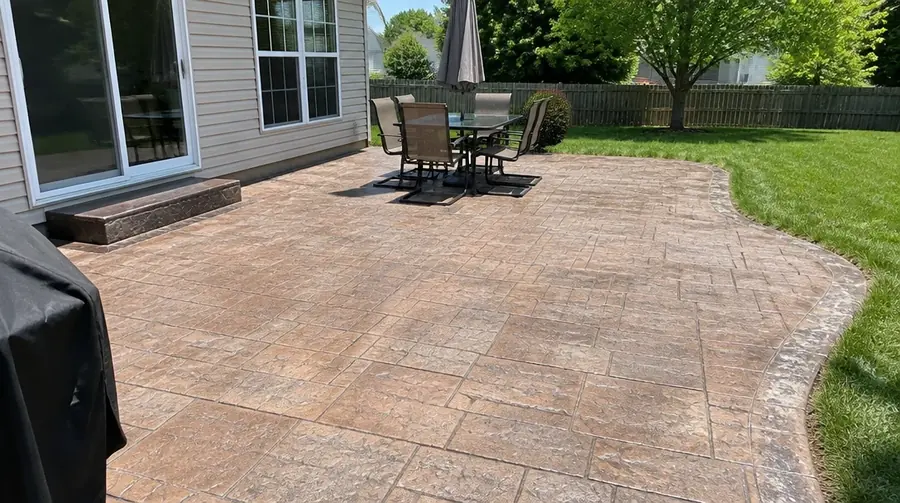
New concrete is at its most vulnerable, and the first year sets the pattern for the decades to come.
- Keep off it for a day or two, and keep furniture off for a week
- Do not drag anything heavy across the new sealer
- Do not use deicers in the first winter
- Clean up leaves, as they can leave tannin stains
- Expect fine hairline cracks at some joints
- Reseal after the first year or two if the surface needs it
Stamped concrete maintenance
Good stamped concrete maintenance is mostly simple and takes little time. Sweep it regularly and rinse it with a garden hose. Wash it once a year with a mild detergent and a soft brush. Clean up spills soon, particularly oil, wine and grease. Leaves and planters left in place can stain the surface, so move them now and then.
Reseal when the color starts to look dull or water stops beading, usually every two to four years. Don't reseal on a schedule if it doesn't need it, as too many coats can trap moisture and turn cloudy. See stamped concrete sealing for what we do.
Salt, snow and Pittsburgh winters
Deicers do more damage to stamped concrete than anything else. Rock salt doesn't attack good concrete directly so much as it holds water at the surface and adds more freeze-thaw cycles. Chemicals such as ammonium nitrate and magnesium chloride are worse, as they can attack the concrete itself. Fertilizers that contain ammonium can do the same, so keep them off the slab.
Use sand or kitty litter for grip, or a small amount of calcium chloride if you have to melt ice. Road salt falling off cars counts too, so hose down driveway aprons and garage thresholds in winter. Clear snow with a plastic shovel where you can, as metal blades can scratch the sealer and chip the raised parts of the pattern.
Warning signs
Catching trouble early usually keeps the cost down. Look over your slab each spring for these.
| What you see | What it means | What to do |
|---|---|---|
| White or cloudy patches | Moisture under the sealer | Solvent wash or strip |
| Peeling or flaking film | Too many coats of sealer | Strip and reseal |
| Small flakes of concrete | Salt and freeze-thaw damage | Seal or overlay |
| Faded color | Sun and worn sealer | Clean, tint and reseal |
| Cracks with a step | The base has moved | Have it checked |
Why some slabs fail early
When a stamped slab looks bad after only a few years, it's rarely bad luck. Too much water in the mix makes the top weak, so it flakes after a few freezes. Stamping too late can leave a thin, dusty surface. Sealing a damp slab traps moisture and turns it white. Skipping the joints or cutting them too late lets cracks wander through the pattern, while a thin or uneven base lets the slab settle.
Most of these problems can't be seen on the day the job is finished, which is why it's worth asking questions before you sign. Ask about the mix, the base and the joints, and ask how the crew plans to handle a hot day. A contractor who has answers ready is more likely to have thought about them.
Sun, shade and where the slab sits
Sunny slabs lose color and sealer the fastest, as UV breaks down the film on top. South-facing patios may need a reseal every two years, while a shaded one can go longer. Shade has its own problem, though. Damp, cool slabs grow algae and moss, which can turn the surface green and slippery. A wash with a mild cleaner and better airflow usually fixes it. If a slab sits under trees, clear leaves often, and try not to let wet piles sit through the fall.
Grills deserve a mention too. Grease soaks in fast and can stain a sealed slab, so a mat under the grill is cheap protection. Put felt pads on metal chairs, and lift heavy planters on feet, so that water doesn't get trapped beneath them.
Should you reseal it yourself?
You can, if you're careful. Pick a dry spell with mild temperatures, clean the slab well and let it dry for a day or two. Roll on a thin coat, as thick coats cause most of the problems. Don't mix sealer types, since a solvent product over a water-based one can lift the surface. If you're not sure what's on the slab, test a small area first. For stripped or failing sealer, or a large area, it usually pays to call someone in.
When it starts to look old
Faded stamped concrete can often be brought back, as the slab may have decades left in it. A tinted sealer or a fresh stain can restore the color at a fraction of the price of a new patio. If the surface has flaked but the slab is level, an overlay gives you a new top. Only a slab that's broken or sunk really needs to come out. Our stamped concrete repair page explains the options.
Common questions
How long before you can walk on new concrete patio?
A day or two, as long as the slab has set properly.
How long before you can walk on concrete patio?
Usually 24 to 48 hours, and a week before heavy furniture.
How long before you can walk on concrete slab?
Normally after a day or two, depending on the weather.
How long before you can walk on new concrete?
About 24 hours in warm weather, or more when it's cool.
More services
- stamped concrete
- stamped concrete patio
- concrete patio contractors
- stamped concrete walkway
- stamped concrete steps and porches
- stamped concrete pool deck
- stamped concrete overlay
- stamped concrete sealing
- stamped concrete repair
- concrete staining
- decorative concrete
- colored concrete
- decorative concrete driveway