Stamped concrete pros and cons for Pittsburgh homes
Stamped concrete pros and cons are easy to list and harder to weigh. You get the look of slate or stone on one solid slab, but you also take on a reseal every few years and a surface that's hard to patch without it showing. Here's how each point plays out in a Pittsburgh yard.
Updated
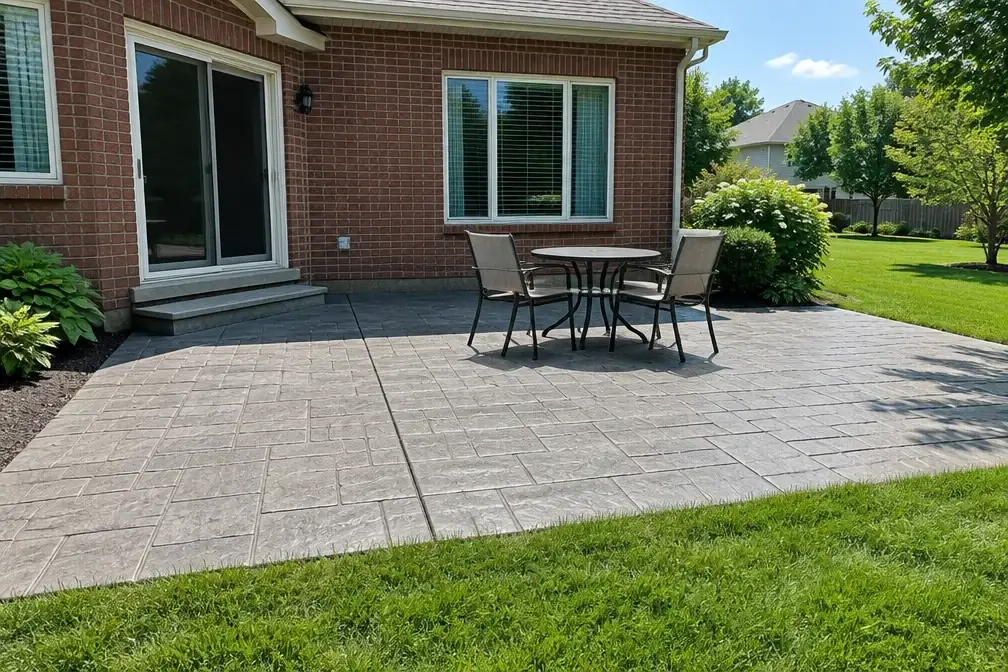
| Pros | Cons | |
|---|---|---|
| Look | Slate, stone, brick or wood on one slab | Poor color work can look flat and fake |
| Cost | Usually far less than real stone | About $25 to $40 per sq ft, more than plain concrete or pavers |
| Upkeep | No joints for weeds, ants or sand to wash out | A reseal every two to four years |
| Repairs | Faded color can be restored on a sound slab | Patches and new cracks are hard to hide |
| Winter | A sealed, air-entrained slab handles freeze and thaw | Rock salt and plow blades wear the surface |
| Grip | Most patterns have some texture underfoot | A glossy sealer is slick when wet |
The pros: why people choose stamped concrete
The first reason is the look. A stamped slab can pass for ashlar slate, cobblestone, brick or even wood planks, in two or three colors, for much less than the real material laid by hand. On a Pittsburgh lot where the house is brick and the yard is small, a pattern and a border can make a plain patio look like it was planned with the house.
The second reason is that it's one piece. Pavers and flagstone have hundreds of joints, and every joint is a place for weeds, ants and washed-out sand. A stamped slab has only its saw cuts, and those sit in the grooves of the pattern where you barely see them. You sweep it and hose it, and that's most of the routine care.
The third is that it's still concrete underneath. Built on a compacted stone base with steel and a proper mix, the slab itself can last 25 years or more, which is the same as any good patio. Our guide to how long stamped concrete lasts goes into what decides that.
- A wide choice of patterns, colors and borders
- One solid surface with no joints to weed
- Curves, steps and odd shapes are easy to form
- Costs less than natural stone laid by hand
- Faded color can be brought back without tearing it out
The cons: what to know before you sign
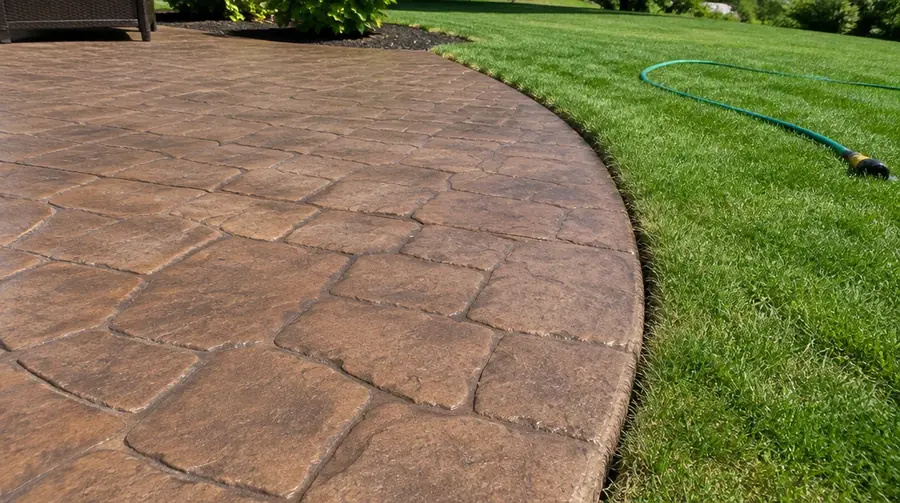
The biggest con is that stamped concrete is a finish that needs looking after. The release color and the sealer are what make it look like stone, and sun, salt and foot traffic wear both down. Most patios here need a clean and reseal every two to four years. Skip that, and the color goes chalky and the surface starts to take in water.
The second con is the price compared with the plain version. A plain broom-finish patio usually runs $15 to $25 per square foot here, against $25 to $40 for stamped. Pavers often come in a little under stamped, at about $18 to $30. The stamping itself adds about $10 to $15 per square foot over the plain slab.
The third is repairs. Pavers can be lifted and reset one at a time. A stamped slab can't. A crack can be sealed and tinted, and a faded surface can be recolored, but a new patch never matches perfectly, and a slab that has settled or heaved usually has to come out.
- Resealing every two to four years, at $1.50 to $3 per sq ft
- Costs more than a plain slab of the same size
- Cracks and patches show in the pattern
- Pour day has no room for error, as the slab must be stamped before it sets
- Not a good fit for ground that moves
Cracks: the con everyone asks about
All concrete cracks, and stamped concrete is no different. The aim is to make it crack where you choose. Saw cuts at the right spacing give the slab a weak line to crack along, and on a stamped job those cuts go in the grooves of the pattern, so the cracks stay out of sight. Problems start when the cuts are too far apart, too shallow or made too late.
Most of the cracks that do show come from below. Pittsburgh clay swells when it's wet and shrinks when it's dry, and many lots are on fill or on a slope. A slab on a thin or poorly compacted base will move, and on a stamped surface a crack that runs across the stones looks worse than one on a plain slab. That's why the base is where a good quote spends its time. If you already have cracks, see stamped concrete repair for what can be done.
Slippery when wet? The sealer is usually the cause
The concrete itself has texture. What makes some stamped patios slick is the coat on top. A thick, high-gloss sealer fills the texture and leaves a smooth film, and that film gets slippery with rain, frost or pool water. A satin sealer in thin coats, with a fine grit mixed into the last coat, gives back most of the grip without changing the look much.
Pattern matters too. Seamless textures and slate patterns have more grip than smooth brick or tile, and a light broom on the borders helps on steps. For areas that are always wet, such as the edge of a pool, read our page on the stamped concrete pool deck before you choose.
The upkeep that comes with it
Plan the upkeep before you plan the pattern. A clean and reseal costs about $1.50 to $3 per square foot, so about $450 to $900 for a 300 square foot patio every few years. You can do it yourself if you're careful, though a coat put on a damp slab or put on too thick turns milky. See stamped concrete sealing for how it's done.
In winter, use sand for grip, not rock salt, and keep metal shovel blades off the surface. Rinse off any salt that walks in from the street. Point downspouts away from the slab, as water running under the edge is one of the most common reasons a patio settles. None of this is hard, but it has to happen, or the cons start to outweigh the pros.
How it compares with the other choices
If you like the idea of stamped concrete but not the trade-offs, there are middle paths. A plain slab with integral color and a smooth or broom finish costs less, needs less care and still looks finished. A plain field with a stamped border gives a decorative look on a smaller area. An overlay can put a pattern on a sound old slab for about $15 to $24 per square foot without tearing it out.
Pavers are the main rival. They cost a little less, handle moving ground better and are easy to repair, but they need joint sand topped up and they grow weeds. Our stamped concrete vs pavers guide compares the two in full, and the stamped concrete cost guide shows prices by patio size.
When the pros win, and when they do not
Weighing stamped concrete pros and cons comes down to where the slab is and how you'll use it. Use these as a quick test before you get quotes.
- Good fit: a backyard patio you see every day and will reseal every few years
- Good fit: firm, well-drained ground and a house with brick or stone to match
- Good fit: a pool deck where you want one surface with no loose joints
- Think twice: a front walk that gets salted and plowed all winter
- Think twice: filled ground, a wet slope or a yard where slabs have moved before
- Think twice: a side path nobody looks at, where a plain slab does the same job
Common questions
What are the disadvantages of stamped concrete?
It needs resealing every two to four years, it costs more than a plain slab, and cracks or patches show in the pattern. It also suits firm ground better than ground that moves.
Is stamped concrete durable?
Yes, when it's built on a compacted stone base with a proper air-entrained mix. The slab can last 25 years or more, though the color and sealer need care.
Why does stamped concrete crack?
Usually because of a soft base, ground that moves, or saw cuts that are too far apart or made too late. Cuts placed in the grooves of the pattern keep most cracks out of sight.
Why is stamped concrete slippery?
Mostly because of a thick, glossy sealer. A satin sealer in thin coats with a fine grit in the last coat gives better grip.
Does stamped concrete add value to your home?
A well-kept stamped patio can make a yard more usable and more appealing to buyers, but no one can promise a set return. A faded, cracked one can count against a house.
Why is stamped concrete so expensive?
It's a normal slab plus color, release, stamp mats, a bigger crew on pour day and sealer. That usually adds $10 to $15 per square foot over a plain slab.
More services
- stamped concrete
- stamped concrete patio
- concrete patio contractors
- stamped concrete walkway
- stamped concrete steps and porches
- stamped concrete pool deck
- stamped concrete overlay
- stamped concrete sealing
- stamped concrete repair
- concrete staining
- decorative concrete
- colored concrete
- decorative concrete driveway